



Novusklinik
Impacted Tooth Extraction
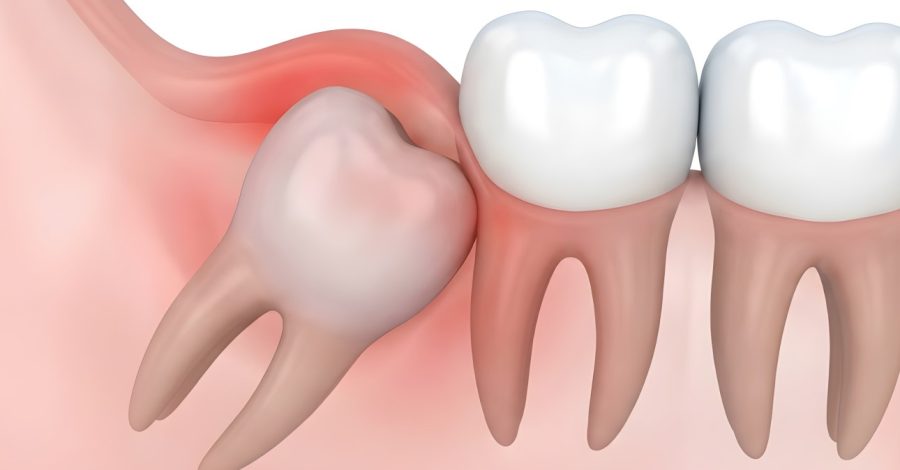
An impacted tooth extraction is a specialized oral surgery procedure designed to remove a tooth that has failed to erupt fully into its correct anatomical position within the dental arch. This condition most commonly affects third molars, known as wisdom teeth, but can also occur in maxillary canines and premolars. Impacted teeth are often blocked by adjacent dentition, dense overlying bone, or thick gingival tissue. When a tooth remains trapped below the gumline, it can exert continuous pressure on the surrounding structures, leading to a variety of localized pathological and mechanical complications.
The clinical indication for extracting an impacted tooth relies on comprehensive diagnostic imaging, primarily cone-beam computed tomography (CBCT) or panoramic radiographs. These advanced imaging techniques allow dental professionals to precisely evaluate the tooth’s angulation, root morphology, and its structural relationship to vital anatomical landmarks, such as the inferior alveolar nerve or the maxillary sinus. Leaving an impacted tooth untreated can lead to pericoronitis, a painful localized soft-tissue infection, as well as the formation of dentigerous cysts, root resorption of adjacent healthy teeth, and dental crowding.
The surgical methodology involves a structured, sterile protocol executed under local anesthesia or sedation to ensure maximum patient comfort. The oral surgeon creates a precise incision in the gingival tissue to expose the underlying bone and the trapped tooth structure. In many cases, specialized surgical instruments are utilized to gently remove a minimal amount of overlying bone, and the tooth is strategically divided into smaller sections. Sectioning the tooth allows for a more conservative removal pathway, minimizing the mechanical force exerted on the jawbone and preserving the integrity of the adjacent periodontal structures.
Furthermore, this precise surgical discipline is carefully managed to optimize post-operative healing and streamline recovery timelines. Following the extraction, the surgical site is thoroughly debrided, disinfected, and closed using advanced, biocompatible suturing materials that support proper tissue approximation. Because the procedure utilizes minimally invasive techniques, postoperative swelling and discomfort are highly controlled. International patients can safely incorporate this scheduled oral surgery into a structured travel itinerary, allowing for adequate initial clinical monitoring before comfortably returning to their daily routines.
