



Novusklinik
Teeth Whitening
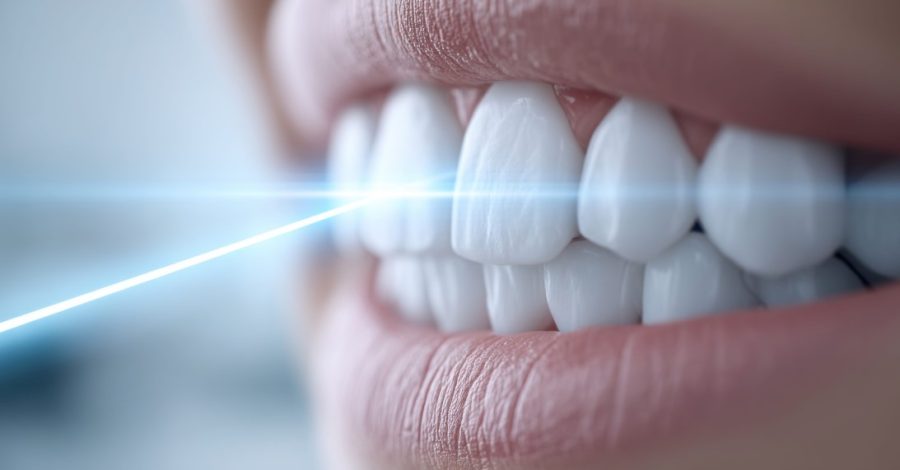
Teeth whitening is a non-invasive cosmetic dental procedure designed to address intrinsic and extrinsic discoloration of the dental enamel. Over time, teeth can lose their natural brightness due to factors such as aging, genetic predisposition, and the consumption of chromogenic substances like coffee, tea, red wine, or tobacco. Professional whitening treatments utilize scientifically formulated peroxide-based compounds to target and break down the organic pigment molecules embedded within the crystalline structure of the enamel, thereby restoring a lighter shade to the dentition.
The clinical execution of this methodology can be managed through in-office professional applications, prescribed home-use protocols, or a combination of both. In-office whitening is performed under controlled clinical conditions, where a high-concentration whitening gel is carefully applied to the surfaces of the teeth. To ensure patient safety, the surrounding gingival tissues are isolated using a specialized protective barrier. The active ingredients are then left to process, sometimes facilitated by specific dental light sources, allowing for a structured change in the enamel shade within a single clinical visit.
Alternatively, home whitening systems prescribed by a dental professional involve the fabrication of custom-molded trays that precisely fit the patient’s arches. These custom trays ensure an even distribution of a lower-concentration whitening gel while preventing the material from leaking onto the sensitive gum tissue. This method allows the oxidation process to occur gradually over a specified number of days under the professional monitoring of a dentist, offering a controlled, progressive pathway to achieving a balanced and uniform shade across the entire smile.
Furthermore, professional teeth whitening provides a safe and highly structured approach compared to over-the-counter options, which can often cause uneven results or enamel abrasion. Clinical monitoring ensures that the patient’s structural dental health, including the presence of micro-cracks or dentin hypersensitivity, is fully evaluated before commencing treatment. International patients can easily integrate this professional procedure into their scheduled travel itineraries, as it requires minimal clinical time while complementing broader restorative or aesthetic dental plans.
